Where to Buy Property in Dubai? Districts Through an Investor’s Eyes (2026)
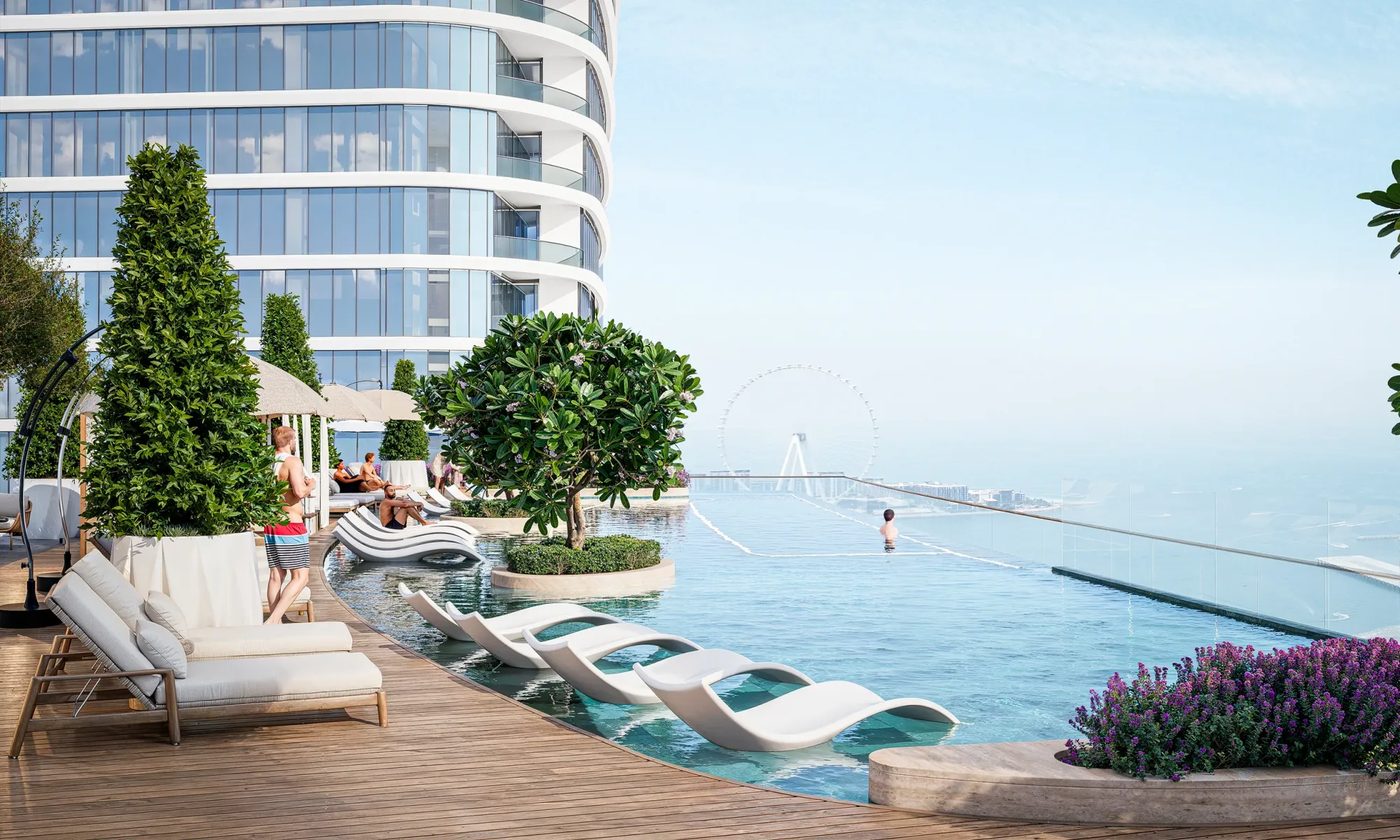
This is a post about the market and about money, so it starts with a caveat. The prices and yields here are orders of magnitude from specific sources at a specific moment (correct as of July 2026). They depend on the building, the floor, the view and the phase of the project, so treat them as a map, not a valuation. This is for information only, not an investment recommendation.
“Where should I buy property in Dubai?” is the question I hear on a first call more than any other. And I almost always answer with a question: what are you buying for? Because there is no single best district. There is a best district for your goal. One if you want to see a rent transfer every month, another if you want to park capital calmly, and another again if you are playing for capital growth over several years.
The short answer, before we get into detail: the highest rental returns today come from mid-market districts such as JVC or JLT (7.2 to 7.4 percent gross), but that is exactly where oversupply risk is greatest. Stability and liquidity are what you buy in Downtown, the Marina and on Palm Jumeirah, accepting a gross yield of 5.5 to 6.2 percent. And capital growth potential is what you look for in young master plans like Dubai Creek Harbour, taking on the longest horizon and the most unknowns. The rest of this post is the numbers behind that.
What decides where to buy in Dubai? The goal first, the district second
Context matters more than ever, because the market has passed the peak of the cycle. The Property Monitor index topped out in October 2025 (235 points) and by May 2026 had slipped to around 231.5, roughly one and a half percent below the peak. Year on year prices are still up (+6 percent per the DLD index in April), but month on month they have been falling since March. Knight Frank forecasts around +3 percent in the prime segment for 2026 and only +1 percent in the mass market.
What does that change? In a boom every district looked good because everything was rising. Now the market runs at two speeds and the choice of location has stopped being cosmetic. So before you ask about a district, answer three questions for yourself: do you care about current rental cash flow, about protecting capital, or about capital growth? What is your horizon: three years or ten? And how much volatility can you take along the way? Only with those answers does the map of Dubai form a sensible picture.
Which Dubai districts give the highest rental returns in 2026?
Gross yields for apartments, per Property Monitor, May 2026:
| District | Gross yield | Who it suits |
|---|---|---|
| International City | 8.9% | extreme cash flow, extreme risk |
| JVC | 7.4% | cash flow, low entry point |
| JLT | 7.2% | cash flow in a more mature district |
| Business Bay | 6.8% | yield in a central location |
| Dubai Hills Estate | 6.4% | steady family demand |
| Dubai Marina | 6.2% | mature waterfront, liquidity |
| Downtown | 5.7% | prestige, price resilience |
| Palm Jumeirah | approx. 5.5% (apartments) | capital preservation |
Two caveats, without which this table misleads. First, these are gross yields. After service charges, vacancy and management, net comes out around 1 to 1.5 percentage points lower, and after all costs, realistically 3 to 5.5 percent a year. I show how to calculate that on your own case in my post on what you really earn on a Dubai property.
Second, broker portals quote higher: for JVC you will see “8.5 to 9.5 percent”, for Business Bay “7 to 9 percent”. Where does the gap come from? Aggregators live off transactions, so they show the prettiest cases. I stick to Property Monitor data, because I would rather you were pleasantly surprised after a year than the other way round.
Why a high yield in JVC can be a trap, and where oversupply is real
JVC (Jumeirah Village Circle) is the most common idea for a first purchase: the cheapest mainstream, a studio from around AED 450,000, the highest yield among the large districts. And this is exactly where I have to apply the brakes.
JVC is Dubai’s biggest building site: around 16,800 apartments under construction and planned for 2025 to 2027. For comparison, Business Bay has around 10,000 in the pipeline. Across the whole market, developers planned around 120,000 completions for 2026; realistically they will deliver 60,000 to 70,000 (historically they achieve about half the plan), and the true peak of handovers will not come until 2027. Around 86 percent of that future supply is apartments, which is precisely what people buy in JVC, Arjan or Dubai Silicon Oasis.
The effects are already visible. City-wide rental growth fell from 6.2 percent a year in December 2025 to around 1.5 percent in April 2026 (REIDIN), and Gulf News states plainly that tenants are gaining negotiating power in exactly those areas, JVC, Arjan, DSO and Sports City: new contracts flat or down to minus 5 percent. Analysts allow for price corrections of 5 to 10 percent in oversupplied districts and yield compression from 8 to 9 percent down to 6 to 7.
Let us run the advertised studio. AED 450,000, rent of AED 38,000 a year, and a broker writes “8.4 percent ROI”. After service charges, realistic vacancy and management, around 5.5 to 6 percent net remains. And rents in that district are softening right now. A high yield in JVC is not a bargain, it is a risk premium. Sometimes it makes sense to take it, but you need to know that is what you are doing.
Where to buy for peace of mind: Downtown, the Marina and Business Bay
If your goal is predictability, you look at mature, central districts. Downtown is 5.7 percent gross, the lowest in the table, but in exchange you get a globally recognised address, a deep secondary market and historically the strongest price resilience in corrections. Dubai Marina (6.2 percent) works similarly: mature waterfront, strong tenant demand, liquidity on resale. Just watch the older towers, which carry higher running costs.
Business Bay is an interesting middle ground: 6.8 percent gross is the best yield in a central location. But it is a district of two worlds. At the top of the price curve stand Omniyat’s projects with Dorchester Collection in Marasi Bay, while in the mass-market segment a pipeline of around 10,000 apartments will push rents down. Here, more than anywhere, the specific building matters more than the district.
The difference between 6.8 in Business Bay and 5.7 in Downtown looks attractive on paper. Except that a 1.5 percentage point difference in gross yield can vanish in a single price correction. The Knight Frank forecast (prime +3, mainstream +1 percent) says essentially the same thing: in this phase of the cycle, segment can matter more than yield.
Palm Jumeirah and branded residences: when a low yield is a deliberate choice
On first-quarter 2026 data, Palm Jumeirah runs at around AED 3,500 per square foot for apartments and around 6,400 for villas. The apartment yield: around 5.5 percent gross, often less. Is that a bad investment? The opposite, if you understand what you are buying. Supply on the island is structurally limited, because there simply is no new land, and demand is sustained by top-end buyers: in 2025 Dubai was the most active market in the world for property at 10 million dollars and above, with around 500 super-prime transactions.
A tier above sit branded residences: homes signed by a hotel brand, with a price premium of around 30 to 40 percent over comparable unbranded projects. The yield can be lower still, but in return you get operator service, predictable quality and historically the best value retention in corrections. That is trading cash flow for resilience and status, and it should be a conscious trade. I write more about that segment, including Omniyat’s projects with Dorchester Collection, in a separate post on branded residences.
Which new districts have the greatest capital growth potential?
The third goal is appreciation: you buy into a young master plan before it matures. The flagship example is Dubai Creek Harbour, marketed as “the new Downtown”. Broker sources put prices at around AED 2,400 per square foot, roughly 25 to 35 percent cheaper than Downtown, with one-bedroom off-plan apartments from around AED 1.2 million. The catalyst is meant to be the Blue Line metro, planned for around 2029.
Here I am cautious. The “8 to 12 percent annual appreciation” figures you will see in presentations come from brokers selling those very projects. The realistic scenario looks different: value rises in steps as infrastructure arrives, local waves of completions along the way knock prices and rents back for a year or two, and the secondary market is shallower than in the Marina. A sensible horizon is at least five years and money you will not suddenly need. If you accept that, young waterfronts are the one segment where the discount to mature districts is measurable.
What does entry cost in each of these districts? Concrete price ranges
For scale, against a market average of around AED 1,650 per square foot (May 2026): JVC is a ticket from around AED 450,000 for a studio. Creek Harbour: from around AED 1.2 million for a one-bedroom. Dubai Marina: around AED 1,800 to 2,800 per square foot, with one-bedrooms usually 1.5 to 2.5 million. Downtown: around AED 2,500 to 3,500 per square foot and up. Palm Jumeirah: apartments most often from AED 3 million upwards. Branded residences: the top shelf of the market. To each of those figures add transaction costs of around 6 to 8 percent of the price. You will find the current premium projects I work with in the catalogue.
What this post does not settle
This post compares districts, but it will not answer the three questions your result actually depends on. First, the specific building and developer: in Business Bay or JVC, the difference between a good and a weak project is larger than the difference between districts. Second, off-plan or secondary market, because that changes the price, the risk and the moment you start earning. Third, your own situation: the currency you measure your wealth in, your horizon, the tax on your side. A market average does not buy an apartment. You buy a specific apartment, in a specific building, at a specific point in the cycle.
If you tell me your goal and your budget, I will prepare a comparison of two or three districts with real net numbers instead of brochure promises. Write to me, it costs nothing beyond fifteen minutes of conversation.
This material is for information only and does not constitute an investment recommendation or legal or tax advice. Prices, yields and forecasts come from the sources indicated (including Property Monitor, REIDIN, Knight Frank, DLD) and may change; treat figures from broker portals as indicative. Correct as of July 2026. Before deciding, verify the numbers for the specific project and discuss your situation with an adviser.